
Skip to content
  • Clear communication
  • Free inspections
Kansas City, MO (816) 555-0170
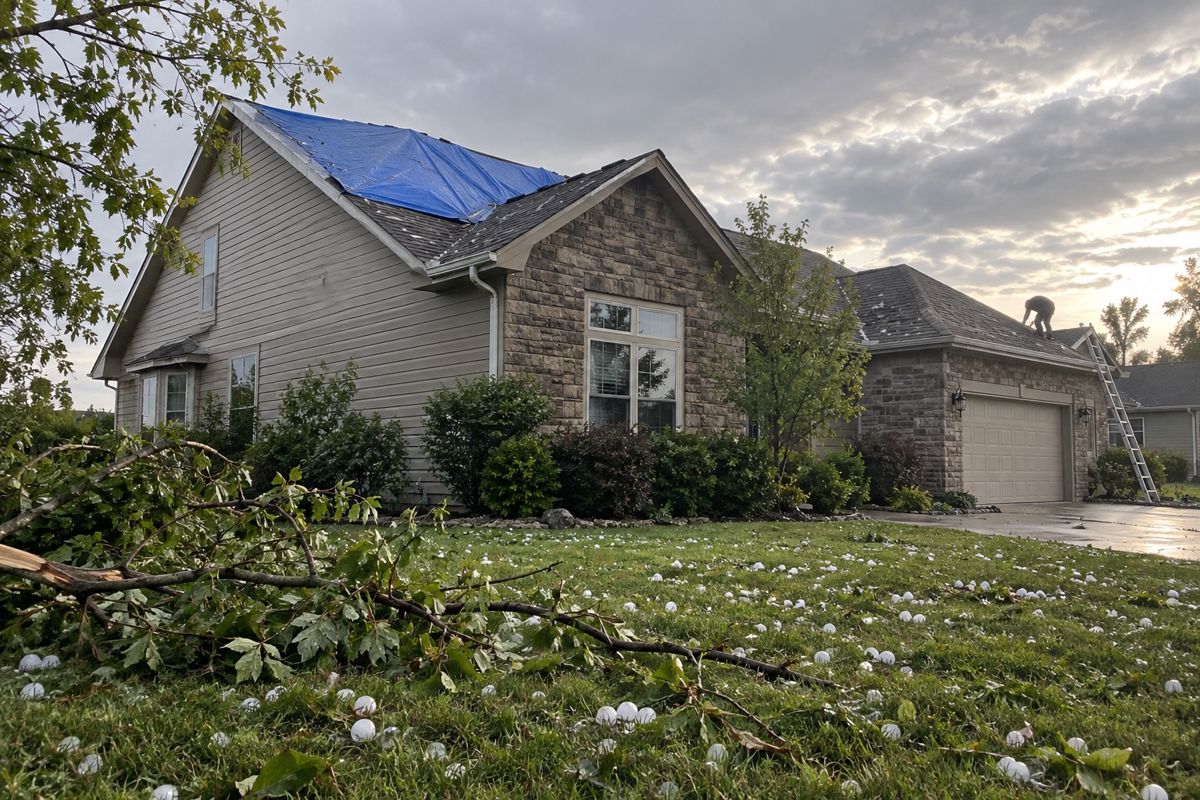
Blue tarp over storm damaged roof with hailstones on the lawn

Storm and hail damage in Kansas City

Storm damage roof repair in Kansas City, from tarp to rebuild

Hail, high wind and fallen limbs can damage a roof without leaving an obvious sign from the ground. We help you protect the house first and sort out repairs next.

  • Temporary protection for urgent leaks
  • Hail and wind damage checked slope by slope
  • Plain explanation of what the damage means

Step 1 of 3

What do you need?

What should you do first after a storm hits your roof?

Safety comes first. Stay off a wet or damaged roof, and stay out of any room where the ceiling is sagging or dripping heavily. If there is a downed power line or a limb on the house, call the utility or emergency services before anything else.

Once it is safe:

  1. Take photos of the damage from the ground and inside the house, with the date.
  2. Move furniture and valuables away from leaks and catch drips with buckets.
  3. Pull up wet rugs and run fans if you can.
  4. Call a roofer to arrange temporary protection if water is coming in.
  5. Contact your insurance company to open a claim.

Keep receipts for any emergency work, since your policy may reimburse reasonable temporary repairs.

How do you tell if hail damaged your roof?

Hail is a regular visitor to the Kansas City area, mostly from spring into early summer. Damage is not always visible from the yard, and it can be spread unevenly across the slopes that face the storm.

What roofers look for

  • Dark, round spots where granules have been knocked off the shingle
  • Soft or bruised spots you can feel with a gloved hand
  • Dented gutters, downspouts, vents and flashing
  • Cracked or split shingles and exposed mat
  • Dents on metal panels, or on fences, decks and cars nearby, which show how large the hail was

Hail damage often shows up as leaks months later, once weakened shingles wear through. Many policies have a time limit for filing, so if you suspect hail, a roof inspection can confirm it before that window closes.

How does a storm damage claim work?

Every policy is different, so read yours or ask your agent. In general, damage from sudden events such as hail and wind is more likely to be covered than damage from age or wear. Some policies use a separate wind and hail deductible, which can be a percentage of the insured value rather than a flat amount.

A typical sequence is a claim, an adjuster visit, a written estimate from the insurer and then repairs. Your roofer can walk the roof, document what they find and explain it, but the insurer makes the coverage decision.

A few cautions:

  • Be careful with anyone who offers to waive or cover your deductible. That is not allowed in many states.
  • Do not sign over your claim or pay in full up front.
  • Get the scope and price in writing, and compare it with the insurer's estimate.

It depends on how widespread the damage is. A tree limb through one section, or wind that lifted a few shingles, can often be repaired. See our page on roof repair for how that works.

Hail is different. When hail has bruised or cracked shingles across most slopes, patching leaves a roof that is still weak everywhere else. In that case a roof replacement is often the sensible route, and sometimes it is what the insurer's estimate covers.

Other things that tip the decision toward replacement include shingles that are brittle and cannot be matched, damaged decking, and roofs that were already near the end of their life before the storm. Ask the roofer to show you photos of what they found so you can see the reasoning for yourself.

How long does it take, and when should you call?

Temporary protection, such as a tarp or sealed cover, can usually be arranged quickly when the weather allows. Permanent repairs take longer. Insurance approvals, material orders and the weather all affect the timeline, and after a big storm many homeowners are calling roofers at the same time.

Call as soon as you see:

  • Water coming through a ceiling or light fixture
  • Shingles, flashing or gutters on the ground
  • A limb or debris resting on the roof
  • Granules piling up at the downspout outlets after hail

After a major storm, expect door knockers. Check any contractor's references, ask for proof of insurance and local credentials, and do not sign anything under pressure. You can go back to our home page to see the rest of our services.

Clear communication Free inspections Written estimates Local crew

How it works

Call or request a quote

Tell us what is happening with the roof.

Free inspection

A roofer checks the roof and gives a written price.

Work done right

Clean crew, nail sweep, warranty in writing.

Request storm and hail damage

Tell us what you need and we call you back.

No obligation.

Step 1 of 3

What do you need?

Questions about roofing in Kansas City

Should I call my insurance company or a roofer first?

If water is coming in, protect the house first and take photos. Then do both. Call your insurer to open a claim, and call a roofer to arrange temporary protection and to look at the damage. Keep the receipts for emergency work. The insurer decides what is covered, so ask them what they need from you.

Can you cover the roof temporarily?

A temporary cover is a common first step when a roof is open to the weather. Describe the damage when you call, and we will tell you what can be arranged and how soon. A temporary cover stops further water damage, but it is not a permanent repair, so plan for the next step.

How long do I have to file a hail claim?

Policies set their own deadlines, and some are as short as a year from the date of the storm. Check your policy or ask your agent as soon as you suspect damage. Waiting also lets small leaks grow, so it is better to have the roof looked at early.

Is hail damage always visible from the ground?

No. Bruises and cracks in shingles are often only visible up close, and damage can be limited to certain slopes. Dented gutters, vents and fences are clues that hail was large enough to hurt the roof. A close look on the roof is the only way to know for sure.

What size hail damages a roof?

It depends on the roof, its age and the wind that came with it. As a rough guide, hail around an inch across or larger can damage standard asphalt shingles, and older shingles can be hurt by smaller stones. If you saw large hail or heard it pounding the roof, get a check.

What if my insurer and the roofer disagree?

It happens. The roofer may find damage the adjuster did not, or the estimates may differ on repair or replacement. Ask the insurer how to request a second look or send in more documentation. Photos and a written explanation from the roofer help. Keep everything in writing.

Ready when you are

Call now or request a quote online.

(816) 555-0170