
Skip to content
  • Clear communication
  • Free inspections
Kansas City, MO (816) 555-0170
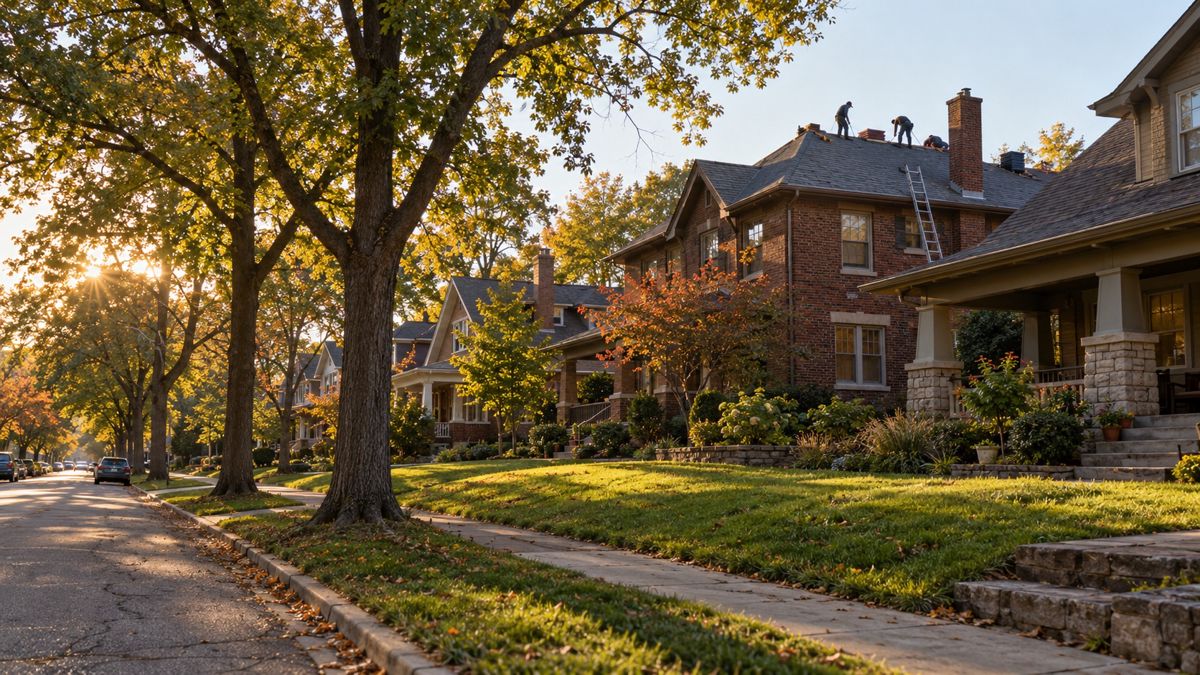
Brick houses with shingle roofs on a tree-lined Kansas City street at golden hour

Mid-century ranches under mature trees

Roofing contractor in Gladstone, MO

Leak repair and replacement for Gladstone's established ranch and split-level homes. Request an estimate and we will confirm availability.

  • Repairs, replacements and inspections
  • Help after hail and storm damage
  • Written quotes before work starts

Established neighborhoods and mature trees

Gladstone lies in Clay County just north of the river, with N Oak Trafficway and Antioch Road as major routes. Many of its streets were built up in the mid-twentieth century, and the housing includes ranches, split-levels and modest two-story homes on lots that now hold tall trees. The roofs are usually wide and low, with long eaves, which suits shingles well but exposes them to branches and debris.

Because these houses have stood for decades, the roofs on them are often on their second or third cycle. Owners tend to call about a stain on a ceiling, an old repair that has failed or a shingle roof that looks tired after a hailstorm.

Long, low roof planes, gutters and tree debris

A ranch roof offers a big, gentle surface. That is good for working on, but it also means a lot of area for hail to hit and for leaves to settle on. Gutters along long eaves fill quickly, and clogged gutters push water back under the shingle edge. Over time that rots the fascia and the first few inches of decking.

Split-level homes introduce lower roof sections that meet the main wall, and the flashing there is a frequent leak point. Attic ventilation is worth checking in houses of this age, since many were built with minimal vents. Poor airflow can bake shingles from beneath in summer and trap moisture in winter, shortening roof life even when the surface looks fine.

Roofing help for Gladstone homes and shops

We bring all five services to Gladstone.

  • Roof repair handles leaks at wall junctions, vent pipes, skylights and old patches.
  • Roof replacement suits shingle roofs at the end of their life, with decking repairs and improved ventilation as needed.
  • Storm damage repair covers hail, wind creasing and impact from tree limbs.
  • Roof inspection offers a clear report on shingles, flashing, gutters and attic conditions.
  • Commercial roofing supports the small businesses and strip centers along the main corridors.

Long ranch roofs often need an inspection first, then repair or replacement based on what the roof surface and attic show.

Houses of this era hide a few surprises, and a good estimate allows for them.

  • Existing layers. Earlier reroofs may have left two layers that must be torn off.
  • Decking type. Older boards or plank decking may need replacement in places.
  • Gutters and fascia. Rot at the edge is often discovered after the old shingles come off.
  • Chimneys and vents. Replacing flashing is part of a proper job.
  • Tree work. Overhanging limbs can limit access and cause damage.

We point out what we can see in advance and flag what we cannot until the roof is open.

Permits, tree trimming and neighbors

A roofing permit is typically needed for a replacement, and requirements can differ between cities in the metro, so ask who files it. Good communication with neighbors about noise, dumpsters and driveway use helps, especially on close streets. Trim branches that touch the roof before work begins, since they drop debris and scrape shingles.

If your claim involves hail, keep records of photos and receipts for any temporary repairs. Policies commonly separate wind and hail from other perils and may apply a different deductible, so reading the wording matters. It is also worth asking whether your insurer pays based on depreciated value or on full replacement cost, since that affects your out-of-pocket share.

Booking a Gladstone estimate

Use the estimate form or call (816) 555-0170. We serve Gladstone, and the request lets us confirm availability for your house.

Tell us what you have noticed, such as stains, drips, missing shingles or a roof you simply suspect is worn out. Add the house type and roof age if you know them. A few photos of the roof from the yard, plus any ceiling marks, speed up the first conversation.

We then schedule an inspection, look at the roof surface, flashing, gutters and attic, and write up the findings. Estimates are written to make sense on paper, with materials and steps described. More about us is on the about page.

Get a quote in Gladstone

Tell us what you need and we call you back.

No obligation.

Step 1 of 3

What do you need?

Questions about Gladstone

My ceiling has a brown stain but no active drip. Is that urgent?

It deserves attention soon, even if it is not an emergency. A stain can mean a slow or intermittent leak, and moisture can damage insulation, drywall and framing over time. Photograph the stain, note when it appeared and request an inspection so the source can be found and fixed. Do not ignore a stain that keeps growing.

Do clogged gutters really damage a roof?

They can. Overflowing water can back up under the lower shingle edge, soak the fascia and rot decking at the eave. Clearing gutters regularly and checking downspouts helps. If you see peeling paint on fascia boards or water stains under the eaves, mention it when you request an estimate. Checking them twice a year is a simple habit.

Is a roof that was layered over before still safe?

It may be, if the structure is sound, but extra layers add weight and can hide problems. Many roofers prefer full tear-off so the decking can be checked. We assess the condition during inspection and explain the tradeoffs, including how layers can affect a new shingle warranty. Weight is the issue most owners overlook.

What does a roofer look for in the attic?

We look for stains on the underside of the decking, damp insulation, daylight where it should not be and the state of ventilation. Mold or rusted nails can signal long-term moisture. The attic tells us a lot about how the roof has been performing, so we ask for access when it is safe.

Can I replace my roof in winter?

Often yes, if the weather allows safe work and shingles can seal. Very cold temperatures make shingles brittle and slow sealing, so crews may wait for a milder day. Emergency repairs can be done in cold weather, with a follow-up once conditions improve if needed. Sealing needs warmth and sunshine, so timing matters.

Ready when you are

Call now or request a quote online.

(816) 555-0170