Skip to content
  • Clear communication
  • Free inspections
Kansas City, MO (816) 555-0170
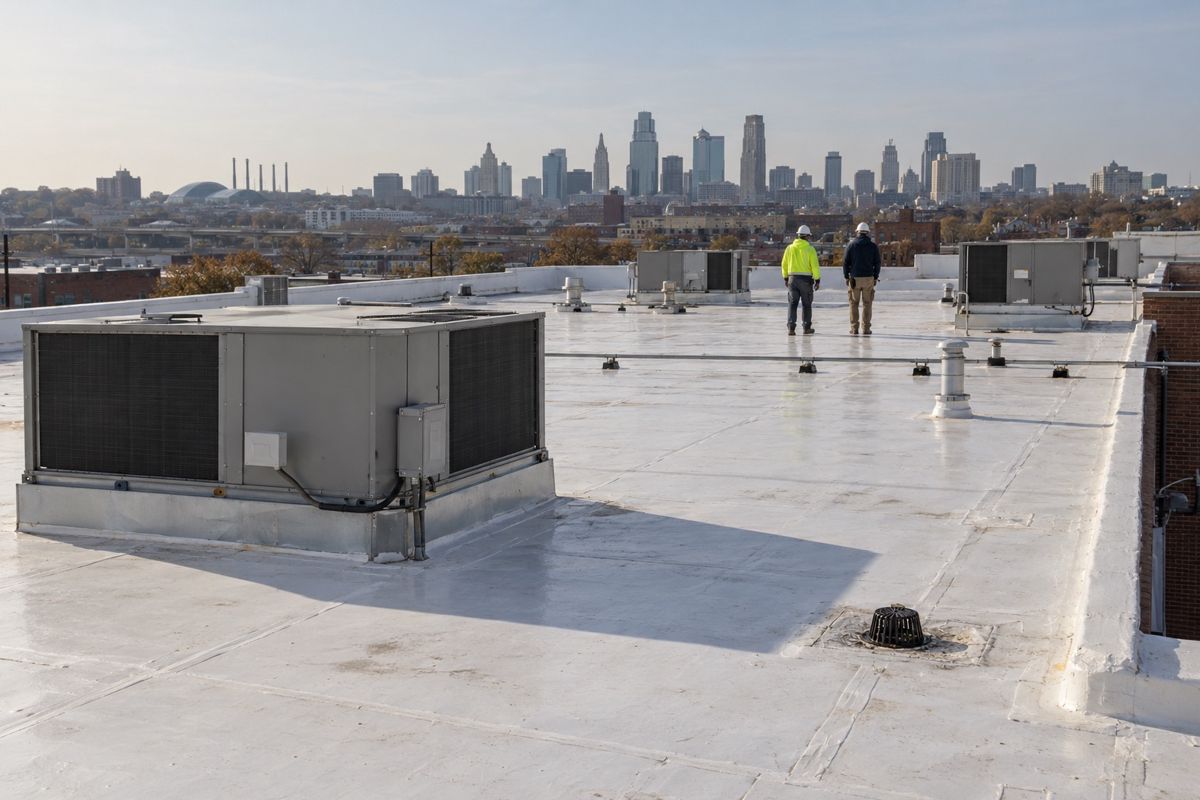
White membrane flat roof on a commercial building with skyline in the distance

Commercial roofing in Kansas City

Commercial roofing in Kansas City for flat and low-slope roofs

Leaks, ponding water and aging membranes cost a business money. We help owners and property managers decide whether to repair or replace.

  • Flat and low-slope roof repairs
  • Replacement planning for shops, offices and warehouses
  • Quotes in writing with the scope spelled out

Step 1 of 3

What do you need?

What types of commercial roofs are common in Kansas City?

Commercial buildings across the metro, from strip centers and warehouses to churches, schools and small offices, tend to have flat or low-slope roofs. The roof system matters, because repair methods differ.

  • TPO and PVC. White single-ply membranes with heat-welded seams, common on newer buildings.
  • EPDM. A black rubber membrane, often glued or ballasted with stone.
  • Modified bitumen. Layered asphalt sheets, applied with a torch or cold adhesive.
  • Built-up roofing. Layers of felt and asphalt, sometimes topped with gravel.
  • Metal. Standing seam or corrugated panels, common on warehouses and pole buildings.

Many owners are not sure what is on their roof. Knowing which system you have, and its condition, is the first step toward a fair quote.

What are the common commercial roof problems here?

Flat roofs have little or no pitch to shed water quickly, so small problems add up.

  • Ponding water. Standing water that stays more than a day or two after rain wears out the membrane.
  • Seam and flashing failure. Heat, cold and building movement open seams and the edges around curbs, drains and parapet walls.
  • Hail and wind damage. Punctures, bruises and membrane lifted at the edges.
  • Clogged drains and scuppers. Leaves and debris back up water onto the roof.
  • Rooftop equipment. Heating and cooling units and vents bring foot traffic and penetrations, which are common leak points.

Kansas City swings from hot summers to freezing winters, and that expansion and contraction is hard on membranes and seals. For leaks that need quick attention, see how we approach roof repair and leak detection.

Should you repair, coat or replace a commercial roof?

The right answer depends on age, condition and how long you plan to own the building. Wet insulation is a major factor. If water has soaked into the insulation, patching the membrane on top will not dry it out.

  • Repair suits isolated leaks on a roof that still has life left in it.
  • Coatings or recover options may be possible on some roofs that are dry underneath and still sound. A roofer should confirm this with moisture checks first.
  • Replacement is the better route when problems are widespread, the insulation is wet or repairs keep failing.

Ask for each option in writing, with what it covers and what it does not, so you can compare them side by side. A roof inspection gives you a condition picture before you commit to a budget.

Commercial roof prices are quoted per project because the variables are large. They include roof area, the system you choose, the condition of the insulation and deck, the number of penetrations, access for equipment and whether the building stays open during work.

Timing depends on size and method. A small repair may take a day. A full replacement on a modest building can take several days to a few weeks, with larger buildings running longer. Weather matters, since many membranes and adhesives need dry, mild conditions.

Ask how the crew will protect your tenants, stock and equipment during the work, and what the plan is for rain delays. For a property manager, a schedule that fits around business hours is often as important as the price.

What should you expect from a commercial roofing contractor?

Expect a site visit, a walk of the roof and a written scope. A good contractor photographs what they find and explains it in plain terms, whether you are an owner, a landlord or a property manager.

Before you hire, ask for:

  • Proof of liability and workers compensation insurance
  • A written scope that lists the material, insulation, flashing and edge details
  • The permit plan for your city, since requirements differ across the metro
  • Warranty terms in writing, including who stands behind the product and who stands behind the labor
  • A safety plan for work over occupied space

If your building has also had storm trouble, read about storm and hail damage repair. You can find all of our services on the home page.

What you can expect

  1. Clear communication

  2. Free inspections

  3. Written estimates

  4. Local crew

How it works

1

Call or request a quote

Tell us what is happening with the roof.

2

Free inspection

A roofer checks the roof and gives a written price.

3

Work done right

Clean crew, nail sweep, warranty in writing.

Request commercial roofing

Tell us what you need and we call you back.

No obligation.

Step 1 of 3

What do you need?

Questions about roofing in Kansas City

Do you work on flat roofs?

Commercial roofing mostly means flat and low-slope roofs on shops, offices, warehouses and similar buildings. Tell us the building type, what is on the roof if you know it, and what you are seeing inside. We will explain what a visit would cover and what kind of repair or replacement you may be looking at.

How do I know if water has soaked into my roof insulation?

Signs include soft or spongy spots underfoot, stains inside that keep coming back after repairs, and ponding that does not drain. A moisture survey, using meters or infrared scanning, can map wet areas without cutting the roof open. Wet insulation usually has to be removed, which affects the repair choice.

Can my business stay open during roofing work?

Often yes, with planning. Noise, dust, access and safety around entrances need to be discussed in advance. Some work can be scheduled in phases or outside business hours. Ask for the plan in writing, including how the crew will protect stock, equipment and people below the roof.

How often should a commercial roof be inspected?

A common recommendation is twice a year, in spring and fall, and after any major storm. Checking drains, seams, flashing and rooftop equipment catches small problems before they become interior leaks. Keep a record of inspections and repairs, because it helps with warranties and with insurance conversations.

What is a TPO roof?

TPO is a white or light-colored single-ply membrane with heat-welded seams, used on many flat commercial roofs. It reflects sunlight, which can help with cooling costs in summer. Like any membrane, it needs sound seams, good flashing and clean drains, and it can be damaged by hail or foot traffic.

Does a commercial roof replacement need a permit?

Commercial reroofing generally needs a permit, and requirements differ between Kansas City, Missouri and the surrounding cities. Ask the contractor who will pull it and what inspections the city requires. Some projects also need to meet energy or insulation requirements, so confirm this before you agree to a scope.

Ready when you are

Call now or request a quote online.

(816) 555-0170