
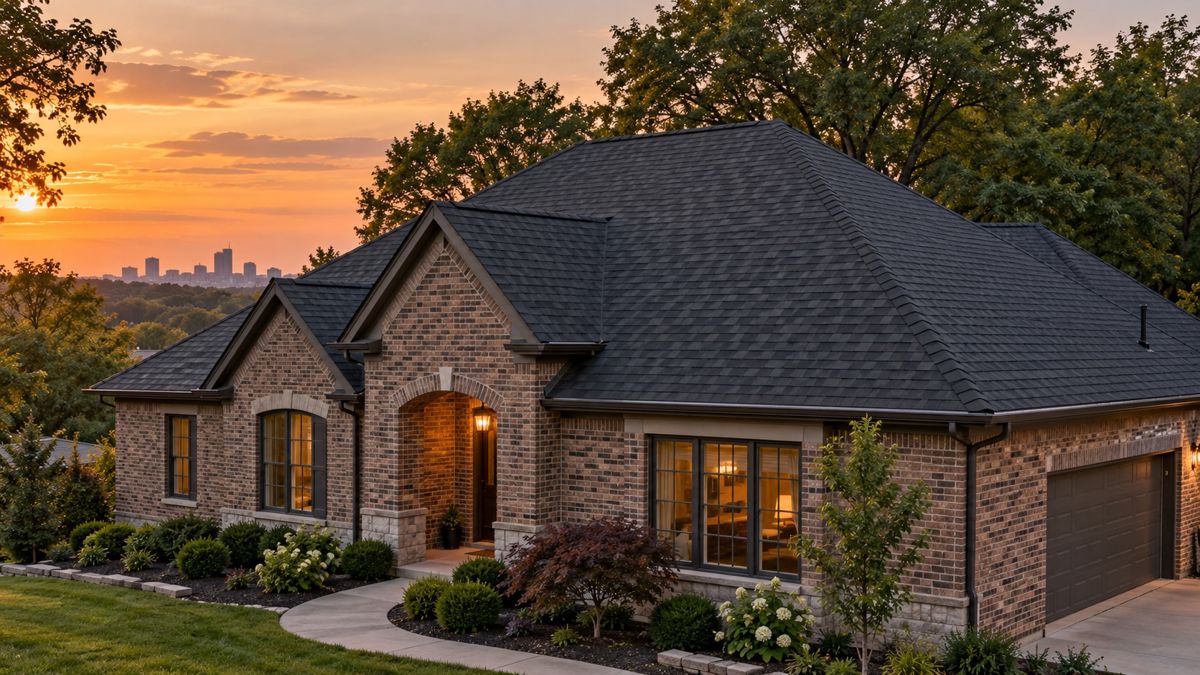
A full roof replacement on a typical Kansas City house usually lands somewhere between about $8,000 and $20,000 for asphalt shingles. The final number depends on the size of the roof, its pitch, the material and what is hiding under the old layer. Those figures are a rough guide based on common US market ranges, not a quote from Kansas City Roofing.
The rest of this guide explains what moves the price, so you can read a quote with confidence and spot a bid that does not add up.
What does a new roof usually cost in the Kansas City area?
Roofers measure in squares. One square covers 100 square feet of roof. For asphalt shingles, installed prices across much of the US commonly fall around $400 to $900 per square, including tear-off, underlayment, flashing and labor. A typical single-family roof of 20 to 30 squares produces the range above.
Remember that the roof is larger than the footprint of the house. A steep pitch, a garage, a porch and a few dormers add squares quickly, so a modest looking house can have a bigger roof than you expect.
Local prices also shift with demand. After a major hailstorm, roofers get booked up, and both quotes and wait times can rise. If your roof is aging but not leaking, planning a replacement in a quieter stretch can give you more choice of crews and dates.
What drives the price of a new roof?
Two houses on the same street can get very different quotes. These are the main reasons.
- Roof size. More squares means more material, more labor and more disposal.
- Pitch and height. Steep roofs and three-story houses are slower and need extra safety equipment.
- Roof shape. Many valleys, dormers, chimneys and skylights mean more flashing and more cutting.
- Old layers. Tearing off two layers takes longer than one, and the extra weight adds disposal cost.
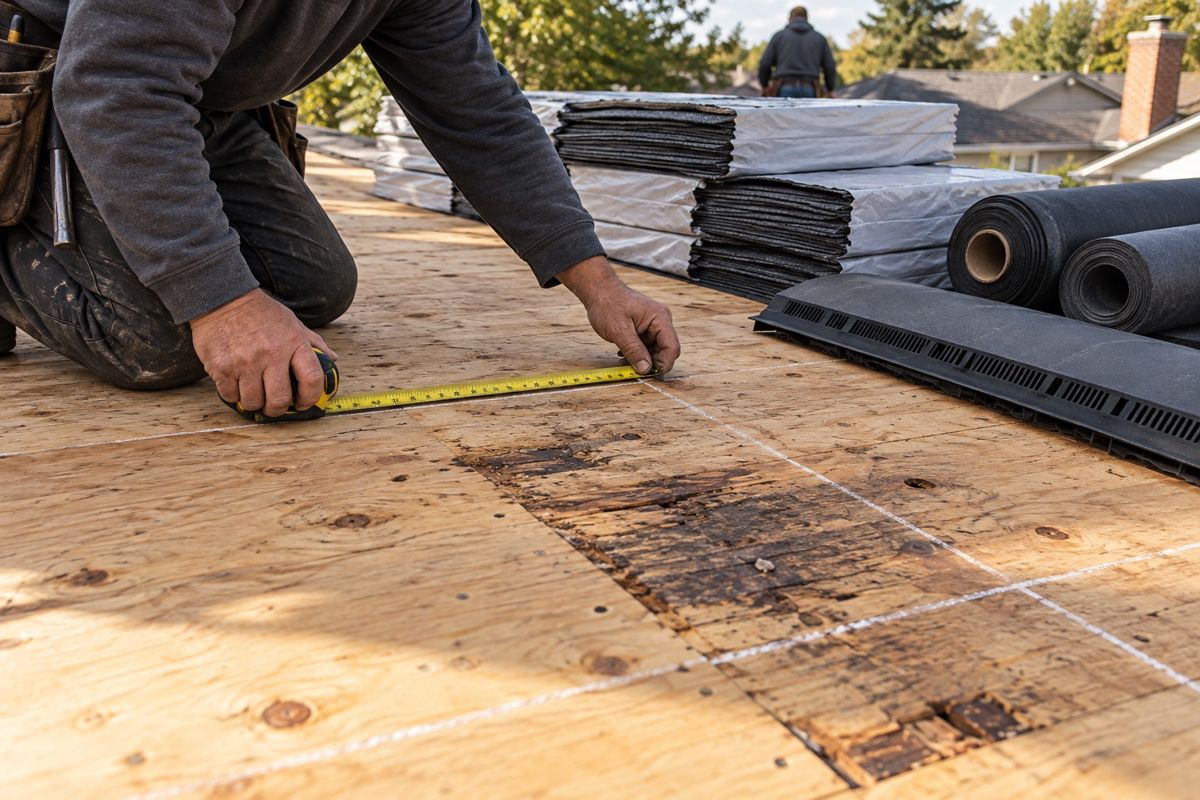
- Decking condition. Rotted or damaged boards under the shingles need to be replaced, and that is only visible after tear-off.
- Ventilation and accessories. Ridge vents, pipe boots, drip edge and ice and water protection are part of a proper job and affect the total.
- Permits and disposal. Many cities in the metro ask for a permit on a full replacement, and dumpster or haul-away costs are built into the price.
Ask every contractor to list these items separately. When one quote is far lower than the others, the gap is usually in the details, such as thinner underlayment, no drip edge or no allowance for decking.
How do roofing materials compare on cost?
Material is the biggest choice you control. In very general terms:
- Three-tab asphalt shingles are the lowest cost, but they are less common now and tend to wear out sooner.
- Architectural asphalt shingles are the most common choice for houses. They cost more than three-tab and look thicker.
- Impact-resistant shingles, often sold as Class 4, cost more than standard shingles. In hail country they are worth a conversation, and some insurers offer a discount for them.
- Metal roofing commonly costs roughly double asphalt or more, and often lasts much longer.
- Synthetic slate, tile and natural slate sit at the top of the range and need roof framing that can carry the weight.
Kansas City's weather matters here. Hot, humid summers, freeze and thaw winters and spring hail all test a roof. A cheaper shingle that fails early can end up costing more than a better one that lasts, so ask what the manufacturer warranty covers and what the contractor warrants for the labor.
What extra costs can show up in the middle of a job?
Even a careful quote cannot see under the old roof. A few things can change the scope once the crew is on site:
- Rotted decking, which is usually priced per sheet or per square foot
- Damaged fascia, soffit or gutters behind the old roof edge
- Chimney flashing that needs rebuilding rather than resealing
- Code items such as drip edge or ventilation upgrades
- A second or third old layer that was not obvious from the ground
Ask how decking is priced before work begins. A good quote states the unit price and how any extra boards will be documented, so there is no argument later.
How do hail and insurance affect what you pay?
Hail is part of life in the Kansas City area, mostly in spring and early summer. If a storm damaged your roof, your homeowners policy may help with the cost. In general, sudden damage from hail or wind is more likely to be covered than wear and age.
Details matter. Some policies have a separate wind and hail deductible, sometimes a percentage of the insured value. Some pay only the depreciated value of an older roof until the work is done. Read your policy or ask your agent what applies to you.
Be careful with anyone who offers to waive your deductible, or who asks you to sign over your claim. That is not allowed in many states, and it can cause trouble with your insurer. Our page on storm damage repair covers what to do first after a storm.
How do you compare roofing quotes fairly?
Price is only one part of the picture. Use this checklist when the quotes come in:
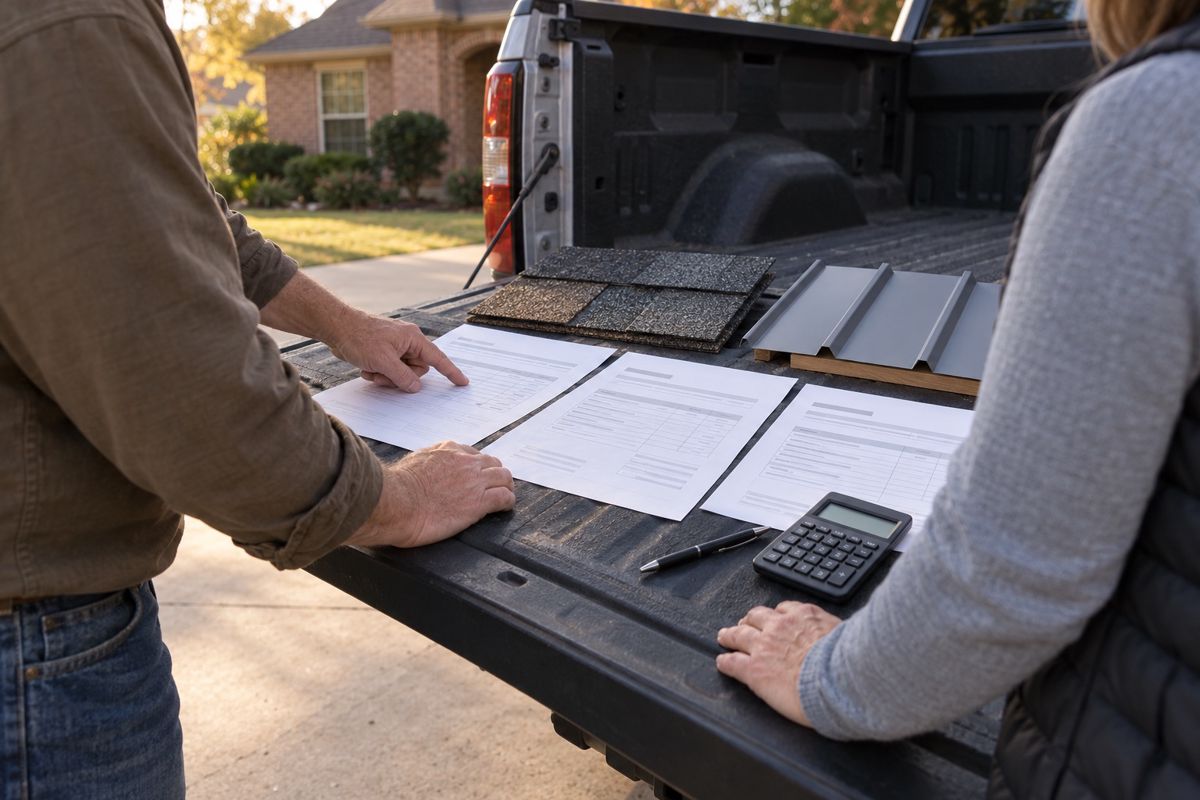
- Get at least three written quotes for the same material and the same scope.
- Check the line items. Tear-off, underlayment, flashing, vents, drip edge, cleanup and decking allowance should all be listed.
- Ask to see a license where one is required, plus proof of liability and workers compensation insurance. Rules for roofers differ between cities in the metro, so ask what applies where you live.
- Ask who pulls the permit and who schedules any city inspection.
- Get warranty terms in writing, both the manufacturer's coverage and the contractor's workmanship coverage.
- Look at the payment schedule. Be cautious with large deposits and with any pressure to sign the same day.
The lowest quote is not always the best deal, and the highest is not always the most careful. The one that explains its scope clearly and answers your questions plainly is usually the safer choice.
What should you do next?
If your roof is old, leaking or damaged and you are not sure whether it needs a full replacement, start by getting it checked. A roof inspection tells you the condition, and a small problem may only need a repair.
If replacement is the right call, read our page on roof replacement in Kansas City to see how the job runs, what to ask and what to expect on the day. Then call or send the short form, and we will arrange a time to look at the roof and put a written quote together.